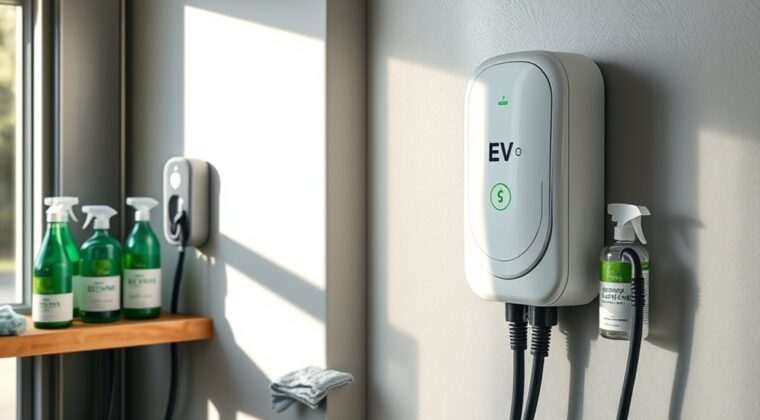
Cleaning your EV charger is simple, but it is not the same as wiping down a countertop. You are cleaning electrical equipment, so the safest products are mild, non-abrasive, low-moisture cleaners used on the outside surfaces only. The goal is to remove dust, road grime, fingerprints, pollen, and light residue without forcing liquid into the handle, connector, vents, buttons, display, or wall-mounted control box.
Quick Answer
The safest EV charger cleaning products are mild soap diluted in water, a soft microfiber cloth, a soft-bristled brush, and a 70% isopropyl alcohol wipe for exterior high-touch areas if your charger manual allows it. Apply cleaner to the cloth first, never spray liquid directly on the charger or connector.
Key Takeaways
- Use a barely damp microfiber cloth with mild soap and water for routine EV charger cleaning.
- Use 70% isopropyl alcohol only on exterior high-touch surfaces, and only when it is compatible with your charger’s manual.
- Do not use bleach, hydrogen peroxide, ammonia, abrasive pads, vinegar, baking soda paste, pressure washers, or direct spray cleaners.
- Never clean inside electrical contacts, open the charger housing, or keep using a charger with cracks, corrosion, heat damage, or fault lights.
At a Glance
| Time Required | 10–20 minutes for routine exterior cleaning |
| Difficulty | Easy, as long as you avoid liquid intrusion and do not open the charger |
| Tools Needed | Microfiber cloths, mild soap, water, soft brush, optional 70% isopropyl alcohol wipe |
| Cost | Usually under $10 if you already have cloths and mild soap |
Warning: Stop charging before cleaning. For hardwired wall chargers, follow your manual; some manufacturers instruct users to turn off power at the circuit breaker before cleaning. Never spray water or cleaner directly onto the wall box, charge handle, connector, or cable ends.
Key Features of Safe Cleaning Products for EV Chargers
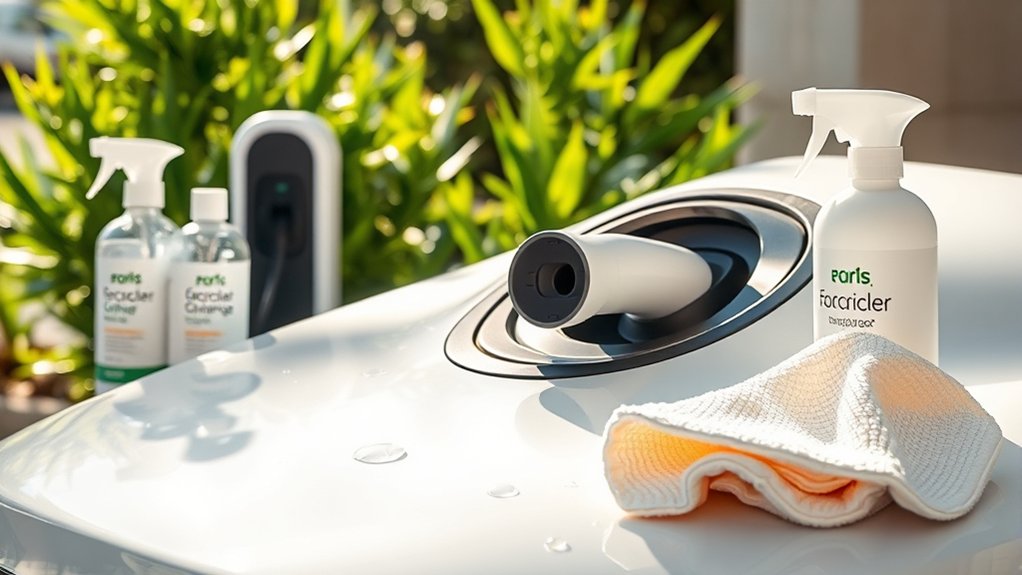
Safe EV charger cleaning products should be non-abrasive, low-residue, and compatible with plastic, rubber, painted metal, display screens, and cable jackets. For routine cleaning, the best starting point is a small amount of mild soap mixed with water and applied with a soft microfiber cloth.
Do not soak the cloth. Wring it out until it is only slightly damp, then wipe the outside of the charger housing, cable, holster, and handle grip. Follow with a dry microfiber cloth so moisture does not sit around seams, buttons, screens, vents, or the connector dock.
For disinfecting high-touch exterior areas, a 70% isopropyl alcohol wipe may be useful because alcohol solutions in the 60%–90% range are widely used for disinfection. Still, alcohol can affect some plastics and rubber after repeated use, so use it lightly and only where your charger manual does not prohibit it.
Note: Store-bought 70% isopropyl alcohol is already diluted. Do not mix 70% alcohol with more water, or you may reduce its disinfecting strength.
Top Mild Soaps for Safe EV Charger Cleaning
The safest everyday cleaner for most EV charger exteriors is mild soap and water. Choose a plain dish soap, unscented hand soap, or gentle Castile soap without grit, bleach, ammonia, degreasers, citrus solvents, or strong fragrance oils.
Use only a few drops of soap in a small bowl of water. Too much soap can leave residue, especially around seams, screens, and textured plastic. After wiping the surface, use a second cloth lightly dampened with clean water to remove soap film, then dry everything with a clean microfiber cloth.
A pH-neutral or pH-balanced soap is a good choice because it is less likely to dull plastic or painted surfaces. Avoid abrasive scrub pads, magic eraser-style melamine pads, steel wool, scouring powder, and stiff brushes. These can scratch the housing, damage labels, or roughen the cable jacket.
How to Use Effective Disinfectants?
Disinfectants should be used with more care than routine soap and water. They are helpful on high-touch exterior surfaces, but they should not be pushed into connector pins, cable ends, display edges, vents, or button gaps.
- Check the manual first: Look for cleaning, maintenance, and chemical compatibility instructions for your specific charger model.
- Stop charging: Unplug the vehicle and place the handle in its dock. For a hardwired charger, turn off the breaker if your manual tells you to do so before cleaning.
- Use a wipe or dampened cloth: Use a 70% isopropyl alcohol wipe, or lightly dampen a microfiber cloth with 70% isopropyl alcohol. Do not spray alcohol onto the charger.
- Wipe high-touch areas only: Focus on the handle grip, buttons, screen frame, cable holder, and outer housing. Avoid the connector face and electrical contacts.
- Let it air dry: Allow the surface to dry fully before restoring power or charging. If the surface remains wet, dry it with a clean microfiber cloth.
Do not use bleach, hydrogen peroxide, ammonia, window cleaner, bathroom cleaner, aerosol spray, petroleum solvent, brake cleaner, or strong degreaser. These products can discolor plastics, dry out rubber, damage labels, or leave conductive or corrosive residue.
Pro Tip: Keep one dry microfiber cloth just for the connector handle and cable. Using a separate cloth reduces the chance of dragging grit from the wall box across high-touch parts.
What to Look For in Specialized Electronics Cleaners
A specialized electronics cleaner can be useful for screens, buttons, and exterior plastic, but only if it is labeled as safe for electronics and leaves no residue. Choose a cleaner that is non-abrasive, fast-drying, and safe for plastic and rubber.
Do not assume that “electronics cleaner” means safe for every part of an EV charger. Some contact cleaners are made for exposed electrical components after equipment is powered down and serviced by trained people. That does not mean you should spray them into your EV charger connector or open the charger housing.
Look for these features:
- Residue-free formula: Helps prevent film around screens, buttons, and seams.
- Plastic-safe labeling: Reduces the risk of haze, cracking, or discoloration.
- No direct-spray requirement: A cleaner you can apply to a cloth is safer for routine exterior cleaning.
- No oil or polish: Shiny protectants can make handles slippery and attract dust.
If the charger has a touchscreen, follow the same basic care used for other electronics: use a soft, lint-free cloth, avoid moisture in openings, and avoid harsh cleaners. Apple’s electronics cleaning guidance allows 70% isopropyl alcohol wipes on exterior iPhone surfaces but also warns against moisture in openings, bleach, hydrogen peroxide, abrasives, and compressed air. Those same cautions are useful when you clean charger screens and buttons.
Essential Tools for Safe Cleaning of Your EV Charger
When cleaning your EV charger, the right tools matter more than strong chemicals. Gentle tools help remove dust and grime without scratching the surface or forcing debris into electrical areas.
- Soft microfiber cloths: Use one damp cloth for cleaning and one dry cloth for finishing. Microfiber traps dust and reduces scratching.
- Soft-bristled brush: Use a clean detailing brush or soft toothbrush around exterior seams, the cable holster, mounting edges, and textured plastic. Do not brush inside electrical contacts.
- Small bowl of mild soap and water: This is safer than a spray bottle because it keeps liquid away from openings.
- Optional 70% isopropyl alcohol wipe: Use it for exterior high-touch areas only if your manual allows alcohol-based cleaning.
- Flashlight: Use it to inspect the cable, connector face, holster, and wall box for cracks, corrosion, heat marks, insects, or moisture.
Be careful with compressed air. Do not blast air into the connector, open the housing, or try to clean internal compartments. If you use air at all, keep it low pressure and use it only to move loose dust away from exterior vents or the outer holster area.
Safe Step-by-Step Cleaning Process
Use this process for routine cleaning of a home Level 2 charger or portable EVSE. For public chargers, do not clean the unit beyond wiping the handle with an approved wipe if the site allows it. Report damaged public equipment to the network operator instead.
- Stop the session: End charging through the vehicle, app, or charger. Unplug the connector from the vehicle.
- Secure the handle: Place the handle in the dock so the connector face is protected from moisture and dirt.
- Cut power if required: For hardwired wall units, follow the manufacturer’s instructions. Some manuals require power to be turned off at the circuit breaker before cleaning.
- Dry dust first: Use a dry microfiber cloth to remove loose dust, pollen, spider webs, and grit.
- Wipe the housing: Use a lightly damp cloth with mild soap and water. Wipe the front, sides, cable holder, and outer handle grip.
- Clean crevices gently: Use a soft brush around the holster and exterior seams. Keep the brush away from connector contacts.
- Rinse by wiping: Use a second cloth lightly dampened with plain water to remove soap film.
- Dry completely: Wipe with a dry microfiber cloth and allow the charger to air dry before use.
- Inspect before charging: Check for cracks, swelling, exposed wire, corrosion, burn marks, loose mounting, or unusual odors.
Warning: Do not use the charger if the cable is frayed, the connector is cracked, the wall box is damaged, or the unit shows a fault after cleaning. Stop using it and contact the manufacturer, installer, or a qualified electrician.
What Not to Use on an EV Charger
Some household cleaners seem harmless but are poor choices for EV charging equipment. Avoid these products and methods:
- Bleach or hydrogen peroxide: These can discolor surfaces and may damage some materials.
- Ammonia or glass cleaner: These can affect screens, plastics, coatings, and labels.
- Vinegar: It is acidic and can leave odor or residue. Do not use it on connectors or electrical areas.
- Baking soda paste: It can be abrasive and can leave powdery residue near seams and contacts.
- Pressure washers or garden hoses: Even outdoor-rated chargers should not be directly blasted with water.
- Aerosol sprays: Sprays can drive liquid into openings and around buttons.
- Metal picks or needles: These can damage contacts and create shock or short-circuit risks.
- Polishes or silicone protectants: These can make handles slippery and attract dust.
How Often Should You Clean an EV Charger?
For most home chargers, a light cleaning once a month is enough. Clean more often if the charger is outdoors, near road dust, exposed to pollen, used by multiple drivers, or mounted in a garage where sawdust, insects, or salt spray can build up.
Inspect the cable and connector every time you notice slow charging, fault lights, tripped breakers, unusual heat, a loose handle fit, or visible dirt inside the dock. Cleaning can remove surface grime, but it cannot fix a worn connector, damaged cable, bad ground, water intrusion, or internal fault.
Outdoor EV Charger Cleaning Tips
Outdoor chargers need extra care because wind, rain, dust, bugs, and temperature swings can leave residue around the wall box and holster. Clean on a dry day when the charger is cool to the touch. Avoid cleaning in heavy rain, direct hot sun, freezing weather, or while the cable is wet.
Keep the connector dock closed or covered when possible. After storms, check for mud, leaves, insects, standing water, or debris around the charger. Do not rinse the unit with a hose. A charger may be weather-rated, but that does not mean direct liquid spray is a safe cleaning method.
When Cleaning Is Not Enough
Stop cleaning and get help if you see signs of damage. These include a cracked wall box, loose mounting screws, dark heat marks, melted plastic, a burnt smell, corrosion on the connector, exposed cable conductors, repeated breaker trips, or a charger that will not clear a fault after drying.
Do not open the charger housing to clean inside it. Many wall connectors and EVSE units are not user-serviceable. If dirt, insects, or moisture appear to be inside the charger, contact the manufacturer, network provider, installer, or a licensed electrician.
Frequently Asked Questions
Is using 91% rubbing alcohol OK for cleaning a phone charger?
For many electronics, 70% isopropyl alcohol is the safer standard for exterior disinfecting because it has enough water content to support disinfection and is less harsh than stronger alcohol. For a phone charger, unplug it first, wipe only the outside of the brick or cable with a lightly damp cloth, and keep alcohol out of USB ports, prongs, and cable ends. For an EV charger, do not use 91% alcohol unless the manufacturer specifically allows it.
How do you clean an EV charger safely?
Stop the charging session, unplug the vehicle, secure the handle in its dock, and follow your manual’s power-off instructions. Wipe the exterior with a microfiber cloth lightly dampened with mild soap and water. Wipe again with a clean damp cloth, dry fully, and inspect the cable, handle, wall box, and dock before using the charger again.
What can I clean my charger with?
Use mild soap diluted in water, microfiber cloths, and a soft brush for exterior crevices. For high-touch exterior areas, use a 70% isopropyl alcohol wipe only if the manual allows it. Do not use vinegar, baking soda paste, bleach, hydrogen peroxide, ammonia, solvents, abrasive pads, pressure washers, or direct spray cleaners.
Can I clean inside the EV charger connector?
Do not put liquid, brushes, cotton swabs, metal tools, or compressed air into the connector contacts. If the connector face is dirty, wipe only the outer plastic with a dry cloth. If you see corrosion, moisture, bent pins, burning, or debris inside the contact area, stop using the charger and contact the manufacturer or a qualified electrician.
Can I hose off an outdoor EV charger?
No. Even if the charger is outdoor-rated, do not hose it down or pressure-wash it. Direct spray can force water into seams, the handle, the dock, buttons, or vents. Use a lightly damp cloth on the exterior and dry the charger before use.
What is the 80% rule for EV?
The 80% rule is a battery-charging habit, not a charger-cleaning rule. Many EV owners set a daily charge limit around 80% to reduce time spent at high state of charge, while charging higher before long trips. Always follow your vehicle manufacturer’s battery guidance. It does not change how you clean the EV charger.
Conclusion
Keeping your EV charger clean helps protect the housing, cable, handle, buttons, screen, and dock from dirt buildup, but safe cleaning depends on using very gentle methods. Start with a microfiber cloth and mild soap diluted in water. Use 70% isopropyl alcohol only for exterior high-touch areas when your manual allows it. Avoid direct sprays, harsh chemicals, abrasive pads, and any attempt to clean inside electrical contacts or internal compartments.
The safest routine is simple: stop charging, follow the manual’s power-off instructions, wipe the exterior lightly, dry everything fully, and inspect the charger before the next session. If you see cracks, corrosion, heat marks, frayed cable, moisture inside the connector, or repeated fault lights, do not keep cleaning and hoping it improves. Stop using the charger and get qualified help.
Sources
- Tesla Gen 3 Wall Connector Manual — backs up power-off guidance, no direct liquid spray, and damaged-equipment warnings.
- U.S. Department of Energy Alternative Fuels Data Center — backs up the importance of keeping charging equipment clean and checking parts periodically.
- CDC Chemical Disinfectants: Alcohol — backs up alcohol concentration, disinfecting limitations, evaporation, flammability, and material compatibility cautions.
- Apple: Cleaning Your iPhone — backs up electronics cleaning cautions for 70% isopropyl alcohol wipes, moisture in openings, bleach, hydrogen peroxide, abrasives, and compressed air.
- OSHA 1910.242(b) — backs up compressed-air cleaning limits in workplace settings.